Top Landscaping Services in Bellevue, IA, 52031 | Compare & Call


Tri-State Landscaping is a fully insured, NCMA and ICPI certified landscaping company serving Bellevue and the surrounding eastern Iowa region. We focus on enhancing your home's appearance and value t...

Ridge Road Nursery & Landscaping
Ridge Road Nursery & Landscaping is your local, full-service partner for creating and maintaining beautiful outdoor spaces in Bellevue, IA. We understand the unique challenges homeowners face in our a...

Michel Septic Service & Construction
Michel Septic Service & Construction, LLC has been the trusted septic specialist for Bellevue, IA, and surrounding Jackson and Dubuque counties since 2017. As a licensed and insured local business, we...
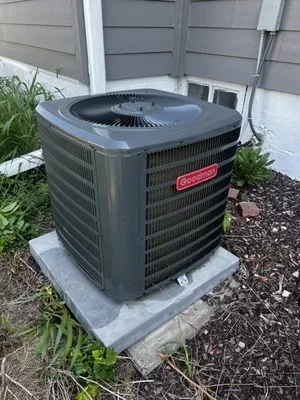
K&B Services LLC is a versatile Bellevue, Iowa-based company ready to tackle a wide range of projects for local homeowners and businesses. With expertise spanning gutter services, fencing and gates, a...

Deppe Landscape & Design
Deppe Landscape & Design LLC has been a trusted landscaping and contracting partner for residents and businesses in Jackson and Dubuque counties since 2008. Based in Bellevue, Iowa, we provide a compr...
RAD Lawn Care is your trusted local landscaping partner in Bellevue, IA. We understand the unique challenges Bellevue homeowners face, such as hard, compacted soil that stifles healthy grass growth an...
Questions and Answers
What solutions exist for erosion on steep bluff-side properties in Bellevue?
High bluff-side slope erosion in silt loam soils requires graded terraces with French drains at 1-2% slope, directing water away from unstable areas. Permeable dolomite limestone pavers in patios and walkways meet Bellevue City Hall Planning Department runoff standards by allowing 8-12 inches per hour infiltration rates. For severe cases, we install subsurface drainage mats covered with erosion control blankets and deep-rooted native grasses that stabilize soil while maintaining natural water percolation patterns essential for slope integrity.
Is dolomite limestone better than wood for Bellevue patios and retaining walls?
Local dolomite limestone outperforms wood in longevity, with 50+ year lifespans versus wood's 10-15 years in Bellevue's freeze-thaw cycles. Its non-combustible nature supports Moderate Fire Wise ratings in Woodland-Urban Interface zones by creating defensible space without fuel accumulation. The material's natural permeability (0.5-1.0 cm/sec) manages runoff better than impervious alternatives, while its thermal mass moderates temperature extremes better than composite materials. Properly installed limestone requires minimal maintenance beyond occasional joint sand replenishment.
How should I handle invasive species without harming Bellevue's waterways?
For invasive species like garlic mustard or Japanese knotweed, mechanical removal before seed set is preferred, followed by targeted herbicide applications only during approved windows that avoid Iowa's phosphorus application restrictions near waterways. We schedule treatments outside spring runoff periods when soil absorption is optimal, using selective products that break down within 14-21 days. Regular monitoring identifies new infestations early when manual removal is still effective, preventing the need for broader chemical applications that could impact Mississippi River tributaries.
What permits and licenses are needed for landscape grading on my quarter-acre lot?
Grading work on 0.25-acre lots requires Bellevue City Hall Planning Department approval for any cut/fill exceeding 2 feet vertically or disturbing over 5,000 square feet. Contractors must hold Iowa Department of Public Health Pesticide Applicator Licensing for any soil stabilization treatments, plus general liability insurance covering slope failure risks. For bluff-side properties, additional geotechnical review may be mandated, with certified erosion and sediment control plans filed 30 days before work begins. Unlicensed grading can trigger stop-work orders and significant restoration requirements.
How quickly can you respond to storm damage that violates HOA appearance standards?
Emergency cleanup crews dispatch from Bellevue State Park via US-52, reaching Riverview Residential District properties within 20-30 minutes during peak response windows. This routing avoids downtown congestion while providing access to specialized slope stabilization equipment for bluff-side erosion control. We prioritize safety assessments first, then debris removal that meets municipal nuisance ordinances, with documentation provided for HOA compliance verification within 24 hours of service completion.
What are the benefits of replacing traditional lawn with native plants in Bellevue?
Transitioning from high-maintenance turf to Purple Coneflower, Butterfly Milkweed, Little Bluestem, and Wild Bergamot reduces mowing frequency by 80% and eliminates gas-powered blower use during restricted hours. These deep-rooted natives require no irrigation once established, sequester more carbon than turfgrass, and support 2026 biodiversity standards by providing habitat for pollinators. The shift also future-proofs properties against potential noise ordinance expansions targeting combustion engine landscape equipment, while creating self-sustaining ecosystems adapted to Zone 5a conditions.
Why does my Bellevue lawn struggle despite regular watering and fertilizing?
Bellevue's Riverview Residential District lots, with homes averaging 1964 construction, have 62-year-old soil systems. The silt loam soil (pH 6.5-7.2) common in this area has likely become compacted over decades, reducing permeability and oxygen availability to roots. Core aeration every 2-3 years is essential to break up compaction layers, followed by top-dressing with compost to rebuild organic matter above 3%. Without these interventions, even Kentucky Bluegrass and Fine Fescue mixes cannot establish deep root systems in mature urban soils.
Can smart irrigation systems really save water while keeping grass healthy in Bellevue?
Wi-Fi enabled soil moisture sensors prevent overwatering by measuring actual root zone conditions rather than operating on fixed schedules. These systems maintain Kentucky Bluegrass and Fine Fescue mixes at optimal soil moisture levels between 20-30% volumetric water content, reducing typical irrigation volumes by 30-45% compared to timer-based systems. While Bellevue has no formal water restrictions, this technology implements standard conservation practices automatically, adjusting for daily evapotranspiration rates and shutting off during precipitation events via weather station integration.
