Top Landscaping Services in Trenton, GA, 30752 | Compare & Call


Agape Services, established in Trenton in 2011, is built on a foundation of professionalism, integrity, and respect for every customer. With over eight years of hands-on experience, our focus is on de...
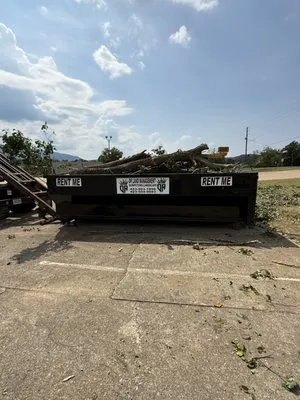
DR Land Management is a Trenton-based company providing comprehensive dumpster rental, landscaping, and excavation services to help homeowners and businesses maintain their properties efficiently. We ...
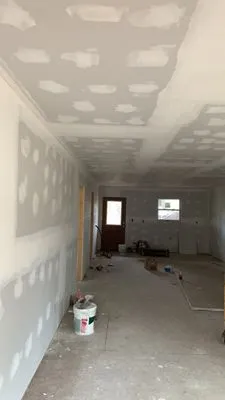
Duncan Construction is a trusted, locally-owned company serving Trenton, GA, and the surrounding Dade County area. We specialize in landscaping, tree services, and general contracting, providing compr...
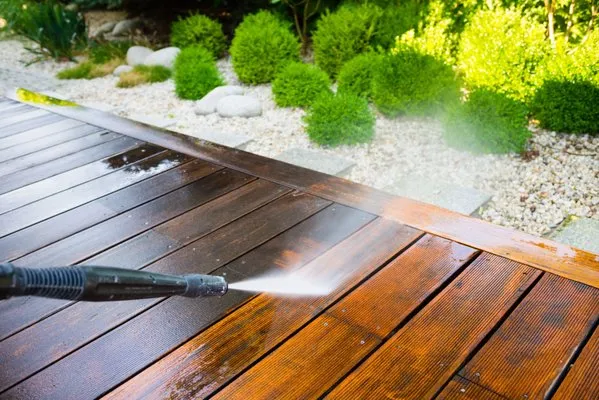
Neet & Natural is your trusted local provider in Trenton, GA, offering comprehensive home and property solutions. We specialize in home cleaning, lawn services, and handyman work to keep your space fu...
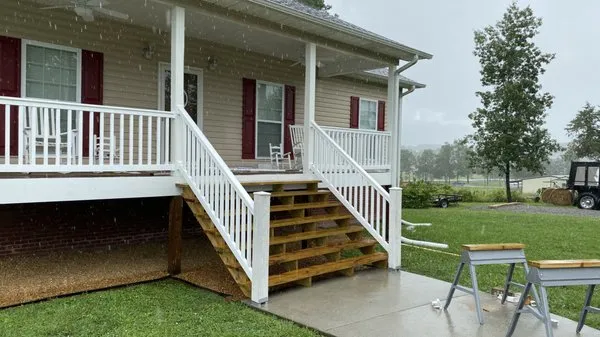
Canyon Creek Property Maintenance is your trusted local partner in Trenton, GA, offering comprehensive property care solutions. We specialize in lawn services, handyman work, and home inspections to k...
Hall & Son is a trusted, family-owned landscaping company serving Trenton, GA, and the surrounding areas. With deep roots in the community, we specialize in comprehensive landscaping solutions, from r...

White's Mowing Service is a trusted, locally-owned lawn care provider serving Trenton, GA, and the surrounding Dade County area. We specialize in comprehensive lawn maintenance, including regular mowi...
Greater Landscape is your trusted, local partner in Trenton, GA, for creating and maintaining healthy, beautiful outdoor spaces. We understand the common local challenges of dying shrubs and persisten...
Talleys Lawn Care is a trusted lawn service provider serving homeowners in Trenton, GA. We specialize in comprehensive lawn care solutions designed to address common local landscaping challenges like ...
McKaig Mowing is a locally owned and operated landscaping company serving Trenton, GA, and the surrounding area. We specialize in keeping your outdoor space healthy and attractive, with a keen underst...
Common Questions
Should we use wood or stone for a new patio? We want it to last and be fire-safe.
For longevity and fire resilience, sandstone or bluestone is superior to wood. These mineral materials are non-combustible, contributing directly to your property's Moderate Firewise rating by creating critical defensible space. They resist weathering, decay, and insect damage indefinitely with minimal maintenance. While the initial investment is higher, the lifecycle cost is lower, and the permeability of properly installed dry-laid stone can aid in managing the site's runoff profile.
An invasive vine is taking over our fence line. How do we remove it safely?
First, identify the species; common threats here include Japanese Honeysuckle or Kudzu. Manual removal of root crowns is most effective for immediate control. For chemical treatment, strict adherence to Georgia BMPs for Phosphorus is required, particularly maintaining mandatory buffer zones near Lookout Creek. Applications must be timed outside of any local blackout dates to protect waterways. A soil test is recommended first, as the acidic clay often lacks the nutrients invasives exploit, guiding a restoration plan.
We have a storm-damaged tree and need emergency cleanup to meet HOA rules. How fast can you respond?
For urgent HOA compliance or safety issues, our emergency dispatch from the Dade County Courthouse area prioritizes access to I-59. This routing allows a crew to reach most Downtown Trenton addresses within the 20-30 minute peak response window. We maintain dedicated storm-response equipment, including electric chippers that comply with standard noise limits, to begin immediate debris management and site stabilization upon arrival.
Our yard floods and we're worried about sinkholes. What's a safe drainage fix?
Moderate runoff on acidic clay loam over Karst topography requires careful planning to avoid subsurface collapse. The primary goal is slowing and dispersing water flow with shallow, permeable solutions. Replacing solid pavers with open-grid systems using local sandstone or bluestone allows infiltration. All such work must be permitted through the Dade County Planning & Zoning Department to ensure it meets updated runoff standards and does not inadvertently channel water toward sensitive subsurface voids.
We're tired of weekly mowing. What's a lower-maintenance, eco-friendly alternative?
Transitioning high-input turf to a climate-adaptive landscape is a forward-thinking strategy. A matrix of native plants like Purple Coneflower, Switchgrass, and Eastern Redbud establishes deeply rooted systems that require no irrigation once established and minimal seasonal care. This xeriscape approach dramatically reduces mowing and future-proofs your property against potential gas-blower restrictions. It also provides superior habitat, aligning with 2026 biodiversity and Firewise Zone 2 defensible space goals.
How do we keep our Tall Fescue lawn green during summer without violating water rules?
Under current Normal Operations guided by WaterSense, efficient irrigation is mandatory. A Wi-Fi ET-based system is the solution, scheduling watering based on real-time evapotranspiration data from local weather stations. This technology applies water only when the turfgrass actually needs it, preventing overwatering and staying well within municipal guidelines. Properly calibrated, it maintains Tall Fescue health while conserving a significant volume of water compared to traditional timer-based systems.
Our yard seems compacted and nothing grows well. Is this a Trenton soil issue?
This is a common characteristic of established Downtown Trenton properties. The average 1990 build date means the native Ultisols—acidic clay loam—have undergone 36 years of construction compaction and routine maintenance. This long-term pressure severely degrades soil structure, reducing permeability and root penetration. Core aeration and incorporating 2-3 inches of composted organic matter are essential to rebuild tilth and correct the naturally low pH of 5.5-6.2 for healthy plant growth.
Why does our contractor need a special license to regrade our half-acre lot?
Significant earthmoving on a 0.35-acre lot involves altering water flow and stability, which falls under regulated contracting work in Georgia. The Georgia Secretary of State Professional Licensing Boards requires specific landscape contracting licenses for projects exceeding certain cost and scope thresholds, which grading typically meets. Furthermore, the Dade County Planning & Zoning Department may require a permit for any grading that changes drainage patterns or impacts property lines. Hiring a properly licensed professional ensures compliance, protects you from liability, and guarantees work meets structural and environmental codes.
