Top Landscaping Services in Harlem Heights, FL, 33908 | Compare & Call
There are 34 landscaping companies server in Harlem Heights FL
Pirate Lawn Service is a local Fort Myers lawn care company dedicated to protecting and beautifying your landscape. We understand the common local challenges homeowners face, such as invasive mulch be...
Greenpro Outdoors is a Fort Myers-based provider of comprehensive lawn and irrigation solutions, serving residential and commercial clients throughout Southwest Florida. We specialize in irrigation co...
Freddie's Lawn Service has been a trusted provider of lawn care in Fort Myers, FL, since 1984. We specialize in comprehensive lawn maintenance, including mowing, edging, debris removal, seeding, and l...
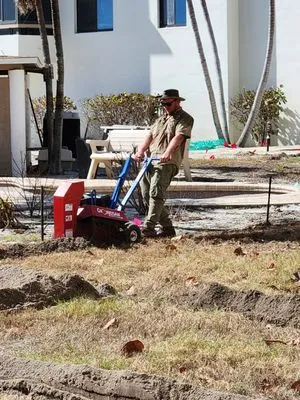
John M. Stephens, Inc. is a family-owned, state-licensed irrigation contractor proudly serving Southwest Florida since 1989. Founded by third-generation Floridian John M. Stephens, the business has de...
Estimated Landscaping Service Costs in Harlem Heights, FL
Question Answers
Our soil seems thin and compacted. Is this typical for Harlem Heights?
Yes, it is a direct result of the area's development timeline. Homes built around 1994, like many here, sit on construction-grade fill soil over the native Myakka fine sand. Over 32 years, this fill layer has compacted and lost organic matter, creating a dense barrier that restricts root growth and water percolation. Core aeration and adding compost are critical to break up this layer and reconnect the root zone to the sand's natural drainage.
Our yard holds water for days after a heavy rain. What's the solution?
Seasonal saturation is common with our high water table and fine sand, which can become temporarily impermeable. The primary fix is improving subsurface flow through strategic grading and creating shallow swales to direct water away from foundations. Installing permeable concrete pavers for patios or walkways also increases absorption and can help meet Lee County's stormwater runoff requirements for new hardscapes.
Is a paver patio better than wood for our climate and fire safety?
Permeable concrete pavers are superior for longevity and compliance. They withstand humidity, termites, and salt air without rotting or warping. For fire safety in this Moderate WUI Zone 2, pavers create a non-combustible defensible space adjacent to your home, a key mitigation strategy. Their permeability also manages runoff, whereas wood decks offer no fire rating and can contribute to drainage issues.
We want to reduce mowing and blowering noise. What are our options?
Transitioning turf areas to a landscape of native plants like Muhly Grass, Coontie, and Firebush significantly reduces maintenance. These plants require no weekly mowing, minimal watering once established, and create less leaf litter, reducing the need for gas-powered blowers. This shift aligns with evolving noise ordinances and supports local biodiversity, providing habitat for pollinators and birds.
We've spotted invasive vines. How do we handle them during the summer fertilizer blackout?
For invasive species like skunkvine or air potato, mechanical removal is the first step during the June 1 to Sept 30 fertilizer ordinance period, as herbicide use is restricted near the blackout. Carefully dig out root systems and bag all plant material. For persistent issues, a targeted, professional application of a systemic herbicide may be necessary in the fall, well outside the restricted dates, to prevent regrowth without violating nutrient runoff laws.
What permits and licenses are needed to regrade our backyard?
Any significant grading that alters drainage patterns on a 0.28-acre lot typically requires a permit from the Lee County Department of Community Development to ensure compliance with stormwater codes. The contractor must hold a license from the Florida DBPR for the appropriate scope, such as a Certified Underground Utility and Excavation Contractor license. This ensures they are bonded, insured, and knowledgeable about local soil conditions and water table issues.
We have an HOA violation notice for overgrowth and need a rapid cleanup. How quickly can a crew arrive?
For urgent compliance work, our crews dispatch from our staging near John Morris Road. Taking US-41/Tamiami Trail directly into Harlem Heights, we can typically be on-site for an initial assessment within 25 to 35 minutes during standard operating hours. We prioritize these calls to address visible overgrowth and debris first, bringing electric equipment to comply with local noise ordinances while we work.
How can we keep our St. Augustine grass alive with only two watering days a week?
Effective irrigation under Phase 1 restrictions requires precision. A Wi-Fi ET-based controller uses local weather data to apply only the water lost to evapotranspiration, often in multiple short cycles to prevent runoff on sandy soil. This method, combined with monitoring soil moisture, ensures your Floratam or Palmetto St. Augustine receives adequate hydration within the legal window, promoting deeper roots and drought resilience.
