Top Landscaping Services in Bunnell, FL, 32110 | Compare & Call


Nature Scapes Landscaping
Nature Scapes Landscaping has been a trusted part of the Bunnell and greater Flagler County community since 1984, crafting custom outdoor spaces that thrive in the local environment. Under the ownersh...
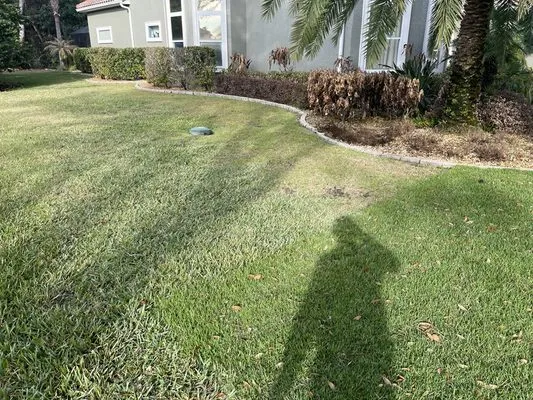
VerdeGo Landscape is a full-service landscaping company based in Bunnell, Florida, providing tailored solutions for both residential and commercial properties across North Florida. Their team includes...

Paradise Landscaping and Nursery
Paradise Landscaping and Nursery is a trusted local business in Bunnell, FL, specializing in landscaping, nurseries, and gardening services. We help Bunnell homeowners tackle common landscaping challe...
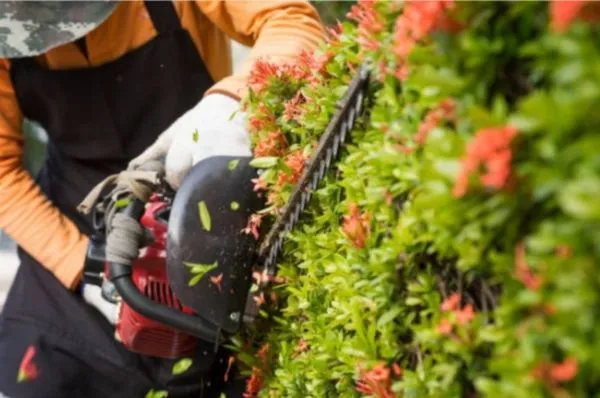
J and J Lawn and Home Maintenance is a veteran-owned and operated business in Bunnell, FL, founded by Jay Bergeron. We specialize in comprehensive lawn care services, including lawn aeration, fertiliz...
Dolphin Irrigation is a family-operated landscaping and irrigation service based in Bunnell, FL, with deep roots in the community since 1988. We specialize in custom landscape designs, irrigation syst...
3D Tree and Landscaping
3D Tree and Landscaping is a locally owned and operated business serving Bunnell, FL, and the surrounding Flagler and Volusia Counties. Founded by former U.S. Marine Staff Sgt. Darren Davis, who has c...

Selective Turf is a family-owned Bunnell landscaping specialist, providing trusted outdoor solutions since 2002. We focus on creating durable, low-maintenance landscapes with a particular expertise in...

Cardenas Landscaping is a full-service landscaping company serving Bunnell, FL, and surrounding areas. We specialize in comprehensive solutions including earthmoving, irrigation, hardscaping, and tree...
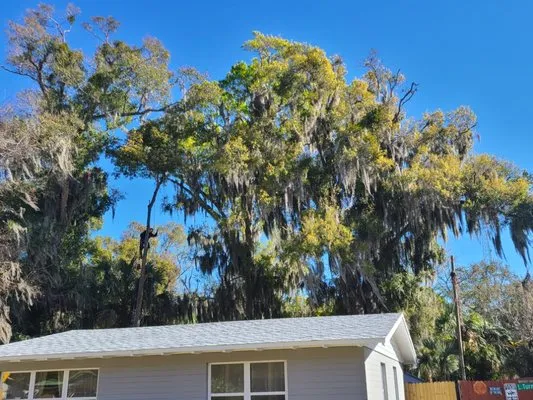
JMH Land Management is your trusted local partner for landscaping, irrigation, and tree care in Bunnell, FL. We specialize in a comprehensive range of services designed to enhance and protect your pro...
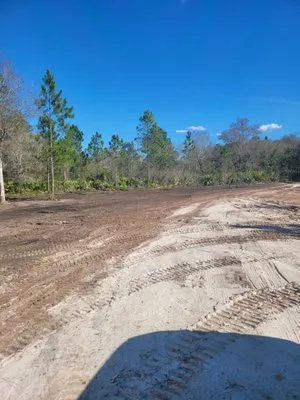
Ames Excavating and Landscaping
Ames Excavating and Landscaping is a veteran-owned and family-operated business proudly serving Bunnell, Flagler County, and the surrounding areas of Putnam and St. Johns. Established in 2020, we brin...
Frequently Asked Questions
My yard stays soggy for days after rain. What's the solution?
Seasonal saturation is common with Bunnell's high water table and dense, acidic subsoils. Surface water cannot percolate quickly. A French drain system can intercept and redirect this water. For any new patios or walkways, specifying Permeable Concrete Pavers is highly advised; they allow rainwater to infiltrate directly, reducing runoff and often simplifying compliance with the City of Bunnell Planning and Zoning Department's stormwater management standards.
How fast can you respond to an urgent HOA violation notice?
For an emergency cleanup to meet a compliance deadline, we can typically dispatch a crew within a standard service response window. Our route from the Flagler County Government Services Building via US-1 allows for reliable 20-30 minute access to most Bunnell neighborhoods. We schedule such urgent work in accordance with local noise ordinances, ensuring all equipment operation begins no earlier than 7:00 AM.
Are permeable pavers a better choice than wood decking for a new patio?
For longevity and low maintenance in our climate, permeable concrete pavers are superior. Unlike wood, they do not rot, warp, or require sealing and resist insect damage. Their permeability mitigates local ponding issues. From a safety perspective, their non-combustible nature contributes to defensible space, an important consideration given Bunnell's Moderate Wildland-Urban Interface (WUI) fire rating, where reducing flammable materials is prudent.
What permits and licenses are needed to regrade my backyard?
Regrading a 0.25-acre lot to alter water flow typically requires a permit from the City of Bunnell Planning and Zoning Department to ensure compliance with drainage and erosion control codes. Crucially, the contracting firm must hold a license from the Florida Department of Business and Professional Regulation, specifically a Certified Landscape Contractor license or higher, which legally authorizes them to perform such structural earthwork and protects you from liability.
I'm tired of weekly mowing and loud gas blowers. Are there lower-maintenance options?
Absolutely. Transitioning sections of high-input turf to a xeriscape of native plants dramatically reduces maintenance. Species like Beautyberry, Muhly Grass, and Beach Sunflower are adapted to our acidic soils, require minimal water once established, and need no regular mowing or blowing. This forward-looking approach conserves water, supports local pollinators, and aligns with evolving noise ordinances that increasingly restrict gas-powered equipment.
How can I keep my St. Augustine grass alive on only two watering days a week?
Adhering to the year-round two-day-per-week municipal limit requires precision. A Smart Wi-Fi Controller paired with a soil moisture sensor is critical; it overrides scheduled cycles when rain provides adequate moisture, preventing waste. For Floratam or Palmetto St. Augustine, deep, infrequent irrigation that encourages profound root growth is key. Proper calibration ensures each zone delivers exactly the required inches of water, maximizing turf health within the legal framework.
Why does my soil feel so compacted and sandy?
Properties in the Bunnell Historic District, developed around 1994, have soils maturing for over 30 years. The predominant Acidic Sandy Spodosols (pH 4.5-5.5) naturally compact under routine foot and machine traffic, forming a dense layer that impedes water and root penetration. This is a primary cause of poor turf health. Annual core aeration combined with top-dressing with quality compost is essential to improve soil structure, permeability, and microbial activity in this specific soil profile.
What are the biggest weed threats and how do I manage them safely?
Vigilance is required for invasive species like Torpedograss in turf and Brazilian Pepper in shrub beds. A pre-emergent herbicide program in early spring is the first defense. For active invasions, targeted post-emergent applications must be carefully timed outside the local fertilizer ordinance's Nitrogen blackout period (June 1 through September 30) to avoid nutrient runoff. Always prioritize mechanical removal where feasible to support long-term soil biology.
