Top Landscaping Services in Bay Harbor Islands, FL, 33154 | Compare & Call

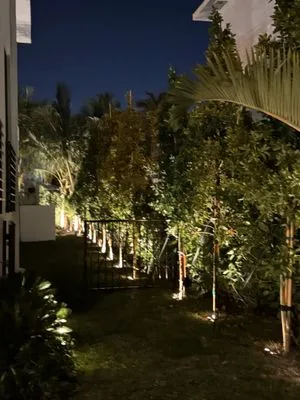
Dreamscape Lighting Design Landscaping
Dreamscape Lighting Design Landscaping specializes in elevating the beauty and functionality of Bay Harbor Islands properties. We expertly combine landscape design with professional electrical service...
Common Questions
My yard floods during high tides. What's a permanent solution?
Tidal surge infiltration is common here due to the high water table and dense, alkaline soil. A graded swale system directing water to a rain garden planted with natives like Coontie can increase absorption. Replacing impermeable surfaces with permeable Oolitic limestone pavers is also critical; this meets Town of Bay Harbor Islands Building Department runoff standards by allowing water to percolate into the substrate, mitigating surface pooling.
How fast can you respond to an emergency cleanup after a storm?
For urgent HOA compliance or post-storm debris removal, our electric fleet can mobilize within the hour. The primary dispatch route uses the Broad Causeway to SR 922, navigating into the Residential District. We factor in peak traffic for a reliable 20-30 minute storm response window. This efficiency is enhanced by equipment that meets the local 8:00 AM to 6:00 PM noise ordinance for gas-powered tools.
How can I keep my St. Augustine grass alive on only two watering days a week?
Stage 1 water restrictions are managed effectively with smart, Wi-Fi ET-based controllers. These systems use local weather data to adjust runtime, applying water only when evapotranspiration demands it, which deepens root systems. For Floratam or Seville St. Augustine, this method prevents overwatering and aligns with the mandatory schedule. Proper calibration ensures turf health while conserving municipal water resources.
What are the biggest weed threats and how do I handle them safely?
Invasive species like Brazilian Pepper and Skunkvine pose significant alerts, outcompeting natives and disrupting ecology. Treatment involves targeted mechanical removal or approved herbicidal applications, carefully timed outside the June 1 to September 30 fertilizer blackout to prevent nutrient runoff. Always use a licensed professional to ensure methods comply with the local ordinance prohibiting phosphorus and nitrogen applications during the restricted period.
What permits and licenses are needed to regrade my property?
Any significant grading or earthwork on a 0.15-acre lot requires a permit from the Town of Bay Harbor Islands Building Department to ensure compliance with drainage and setback codes. The contractor must hold a license from the Florida Department of Business and Professional Regulation for the scope of work. This licensing verifies competency in proper soil handling, erosion control, and adherence to environmental regulations, protecting your investment.
Why does my soil seem so compacted and unproductive?
Bay Harbor Islands lots were developed on native Oolitic limestone. Since the average home was built in 1967, this soil has matured for nearly 60 years, primarily through mineral weathering and fill-sand deposition. This results in a dense, alkaline profile with poor organic matter and slow percolation. Core aeration and incorporating composted organic matter are essential to improve root zone permeability and microbial activity for healthy plant growth.
Is oolitic limestone a better choice than wood for a new patio?
For longevity in a coastal environment, permeable oolitic limestone pavers are superior. They resist salt corrosion, decay, and insect damage that plague wooden structures. Their permeability aids drainage, complementing the area's high water table. From a Firewise perspective, their non-combustible nature contributes to the Moderate-rated Coastal Urban Wildland Interface by creating defensible space, a prudent consideration for property resilience.
I'm tired of weekly mowing. Are there lower-maintenance options?
Transitioning to a climate-adaptive landscape with native plants like Sea Grape, Firebush, and Beach Sunflower significantly reduces water, mowing, and fertilization needs. This xeriscaping approach creates habitat and stays ahead of regulatory trends, such as tightening noise ordinances for gas blowers. An established native planting requires minimal inputs, aligns with 2026 biodiversity standards, and is inherently resilient to local saline and alkaline conditions.
