Top Landscaping Services in Loma, CO, 81524 | Compare & Call

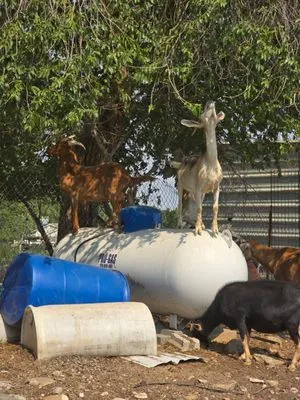
Grazing Guardians LLC is a Loma-based landscaping company offering a natural alternative for property care. We specialize in using managed goat herds for eco-friendly vegetation control, including lan...
Common Questions
We have an invasive weed taking over. How should we handle it?
First, identify the species; common Colorado alerts include Russian knapweed or cheatgrass. Treatment depends on the plant's lifecycle, but always avoid applying any fertilizer or herbicide containing phosphorus on frozen ground, per local ordinance. For perennials, a targeted systemic herbicide applied in fall may be necessary. For annuals, pre-emergent strategies combined with manual removal are effective and have lower ecological impact.
If we have an urgent HOA violation notice, how fast can a crew get here?
For emergency compliance cleanups, a crew dispatched from our Grand Junction base can reach Loma Town Center in 25-35 minutes. The standard route uses US-6/US-50 from the Loma Community Park area directly to your neighborhood. We schedule all urgent service within the local daytime noise ordinance window of 7am to 8pm, utilizing electric equipment to minimize disturbance.
Our yard has white crusty salt buildup and poor drainage. What's the cause?
This is salt accumulation, a direct hazard of irrigating alkaline soil with Colorado River water. The high pH reduces soil permeability, trapping salts at the surface. Solutions include installing a subsurface drainage system or amending soil with gypsum and organic matter to improve leaching. Using crushed native river rock for hardscapes instead of impermeable surfaces also helps meet Mesa County runoff standards by allowing water to percolate.
Why does the soil in our Loma Town Center subdivision seem so dense and dry?
Homes built around 2002, like many here, are on original construction fill soil that has had 24 years to compact without significant organic enrichment. This alkaline sandy loam naturally has low permeability, which restricts root growth and water infiltration. Annual core aeration and top-dressing with compost are required to build stable soil aggregates and counteract the inherent high pH of 8.1. Without this intervention, turf health will decline and water use will increase.
How do we keep our Tall Fescue green under Stage 1 water restrictions?
Smart Wi-Fi ET-based irrigation controllers are essential. They adjust run times daily using local evapotranspiration data, applying water only when the lawn needs it. This system can reduce water use by 20-30% compared to standard timers, keeping turf healthy within voluntary conservation limits. For new installations, consider transitioning zones to Buffalograss, which has a 60% lower water requirement once established.
Do we need a permit to regrade our half-acre lot for better drainage?
Yes, significant grading that alters water flow typically requires a permit from the Mesa County Building Department. For a 0.50-acre lot, the scale of work likely necessitates hiring a Colorado Department of Agriculture-licensed professional. This ensures compliance with erosion control and runoff regulations. Unpermitted grading can lead to fines and create liability for off-site water damage.
Is crushed river rock a good choice for our patio and pathways?
Yes, crushed native river rock is superior to wood for longevity and fire resilience in Loma's Moderate (WUI Zone 2) fire risk area. It provides a stable, permeable surface that requires no maintenance and will not decompose. When installed with a proper geotextile barrier, it suppresses weeds and contributes to defensible space by creating a non-combustible zone around structures, as recommended by Fire Wise guidelines.
What's a low-maintenance alternative to our high-water-use grass?
A xeriscape of regionally native plants like Rabbitbrush, Indian Ricegrass, Four-wing Saltbush, and Blanketflower eliminates weekly mowing and drastically reduces irrigation. This transition aligns with emerging electric equipment mandates, as these plant communities require no gas-powered leaf blowers. The resulting landscape supports local pollinators and meets 2026 biodiversity benchmarks for the area.
