Top Landscaping Services in Montara, CA, 94037 | Compare & Call

My journey in landscaping started right here in San Mateo County, where I was born and raised. After earning a business degree from USF, I followed my lifelong passion for plants, which began in my te...

Steven Melo is a trusted local gardening and landscaping expert serving Montara, CA. Specializing in garden care, landscape maintenance, and professional tree services, Steven focuses on creating sust...

Inch By Inch Landscape is a trusted landscaping company serving Montara, CA, dedicated to helping homeowners maintain beautiful and functional outdoor spaces. We specialize in addressing common local ...
Founded in 1996 in Montara, Go Native began as a native plant nursery, deeply rooted in the local ecosystem. This foundational knowledge informs our specialized work in habitat restoration, erosion co...
Question Answers
Is it possible to maintain a healthy lawn in Montara under current water rules?
Yes, efficient lawn management is achievable under Stage 1 voluntary conservation. The key is a Wi-Fi ET-based weather-sensing controller paired with a drip emitter system for shrub beds and targeted zones. This technology applies water only when evapotranspiration data indicates plant need, preventing overwatering. For Tall Fescue turf, this means deep, infrequent irrigation cycles that encourage drought-tolerant root development while staying well within municipal water use expectations.
Is decomposed granite a good choice for patios and paths here, compared to wood?
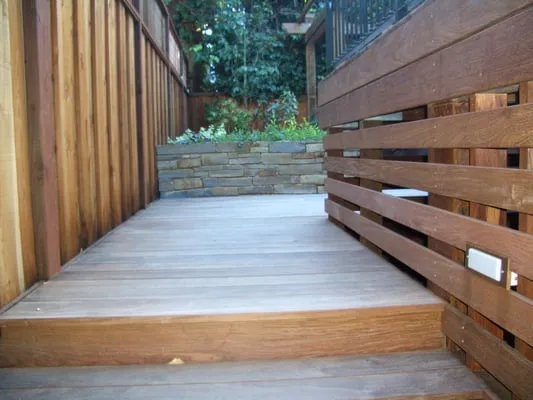
Permeable decomposed granite is a superior material for Montara's context, especially given the Extreme Fire Wise rating and mandatory WUI Zone 1 defensible space requirements. Unlike wooden decks, which are combustible and require constant chemical treatment, decomposed granite is non-flammable, inert, and allows critical rainwater infiltration. Its longevity and minimal maintenance profile make it a resilient choice for creating functional, fire-resistant zones that comply with defensible space regulations.
What are the long-term alternatives to constant mowing and blowing?
Transitioning perimeter and non-use zones to a climate-adaptive xeriscape with native plants is a strategic long-term solution. Planting California Poppy, Coast Buckwheat, and Sticky Monkeyflower establishes a low-water, low-maintenance ecology that thrives in Zone 10a. This approach significantly reduces the need for bi-weekly mowing and the use of gas-powered blowers, aligning with evolving noise ordinances. It also enhances local biodiversity and provides superior habitat value compared to monoculture turf.
What's the best way to manage erosion on my sloped property?
High erosion risk on coastal slopes is exacerbated by the low permeability of compacted sandy loam. Solutions integrate grade control and surface permeability. Installing a network of dry creek beds lined with river rock can channel sheet flow, while replacing solid pavers with permeable decomposed granite paths increases ground absorption. These strategies manage runoff velocity and are designed to meet the San Mateo County Planning & Building Department's standards for on-site stormwater retention, reducing sediment loss.
How quickly can a crew respond for an emergency cleanup after a major storm?
For urgent post-storm debris management or HOA compliance issues, our dispatch from the Montara Mountain area prioritizes coastal routes. Crews traveling via Highway 1 can typically reach most Montara State Beach properties within the 45 to 60 minute window noted for peak storm response. This accounts for potential traffic delays and road conditions specific to coastal access. All initial response vehicles are part of our electric fleet, ensuring compliance with local noise ordinances during restricted hours.
Why does the soil in my Montara yard seem so compacted and lifeless?
Properties in the Montara State Beach Residential area, typically developed around 1975, have soil systems approximately 50 years old. This slightly acidic sandy loam is prone to compaction from decades of foot traffic and organic matter depletion, creating a dense layer that impedes root growth and water percolation. Core aeration during the wet season, followed by top-dressing with a locally sourced compost, is critical to rebuild soil structure and microbial activity. This process directly addresses the inherent low fertility and poor water retention of our coastal soils.
What permits and licenses are needed to regrade a sloped section of my yard?
Any significant grading on a 0.25-acre lot, especially on coastal slopes, requires a permit from the San Mateo County Planning & Building Department to ensure erosion control and drainage plans are engineered correctly. The contractor performing this work must hold a relevant classification license from the California Contractors State License Board (CSLB), such as an 'A' (General Engineering) or 'C-27' (Landscaping). This licensing is non-negotiable for work that alters drainage patterns, protects adjacent properties, and manages the high erosion risk inherent to the area.
How should I handle invasive weeds like French Broom or Ice Plant without harsh chemicals?
Manual removal is the primary treatment for invasive species like French Broom, ideally when soil is moist. For persistent perennials, a targeted cut-stump application of a registered herbicide in late fall is most effective, avoiding the Regional Water Quality Control Board's stormwater runoff restriction blackout dates during the rainy season. Promoting dense growth of native groundcovers like Coast Buckwheat is the best defense, as they outcompete invaders and stabilize the soil without violating fertilizer ordinances.
