Top Landscaping Services in Lineville, AL, 36251 | Compare & Call

Jackie Boys Lawncare is a trusted local lawn service provider in Lineville, AL, dedicated to solving common regional landscaping challenges. We specialize in comprehensive lawn care, directly addressi...

Grassphalt Lawn Services is a trusted local lawn care provider serving homeowners in Lineville, AL. We understand the common local challenges, such as landscape edging damage and persistent standing w...
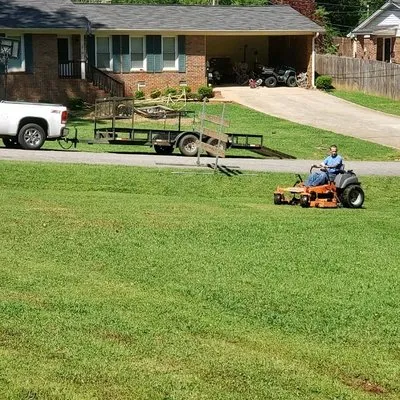
McMillan Lawn Care is a locally owned and operated lawn service business in Lineville, AL, founded in 2020 by US Army veteran Ryan McMillan. A Georgia native who has loved lawn care since his youth—st...

Anchor Property Management and Concierge
Anchor Property Management and Concierge in Lineville, AL, is a locally owned and operated business with over 20 years of experience serving property owners in the area. We specialize in comprehensive...
FAQs
We want a new patio. Is wood or stone better for longevity and safety in our area?
For longevity and aligning with Firewise USA Community Standards, locally sourced fieldstone or concrete pavers are superior to wood. They are non-combustible, providing critical defensible space in our moderate-risk zone, and do not rot or require chemical treatments. A properly installed stone patio on a compacted gravel and sand base can last decades with minimal maintenance, whereas wood decks require significant upkeep and have a shorter lifespan in our humid climate.
How can I keep my Tall Fescue lawn green during summer without wasting water or violating restrictions?
Under normal voluntary conservation, the key is precision. A Wi-Fi ET-based smart irrigation system uses local weather data to apply water only when evapotranspiration rates indicate need, often reducing usage by 20-30%. For Tall Fescue in Zone 8a, this typically means 1 to 1.5 inches of water per week, split into two deep watering sessions to encourage drought-tolerant roots. This method maintains turf health while staying well within municipal water guidelines.
We're regrading our backyard for a new patio. What permits and contractor qualifications should we verify?
Any significant grading or earth-moving on a 0.35-acre lot typically requires a permit from Lineville City Hall Planning & Zoning to ensure proper drainage and adherence to setback rules. The contractor must hold a license from the Alabama Home Builders Licensure Board. This is crucial as improper grading can cause off-site water damage, leading to liability. Always request their license number and confirm it's in good standing before work begins.
A storm brought down a large limb. How quickly can a crew respond for an emergency cleanup to avoid HOA violations?
For an emergency stabilization call, our standard dispatch from Lineville City Park via AL-49 is 20-30 minutes during peak hours. The priority is to make the site safe by removing hazards from structures and driveways. A follow-up visit for detailed debris processing and stump grinding would be scheduled within 24-48 hours to ensure full compliance with community standards.
My yard turns into a pond after heavy rain. What's a permanent solution that also looks good?
Moderate runoff is common due to the low permeability of our acidic clay subsoil. A functional solution involves creating a dry creek bed or French drain system to channel water away from foundations. Using permeable materials like locally sourced fieldstone or concrete pavers set on a gravel base for patios and walkways increases ground absorption. These designs often meet the City Hall Planning & Zoning department's updated standards for managing on-site stormwater runoff.
I'm tired of weekly mowing and noisy gas blowers. Are there lower-maintenance, quieter options?
Absolutely. Transitioning sections of high-input turf to a layered planting of native species like Oakleaf Hydrangea, Purple Coneflower, and Switchgrass drastically reduces mowing and watering needs. These plants are adapted to our climate and soils, requiring minimal care once established. This shift pre-adapts your property to evolving noise ordinances and supports 2026 biodiversity goals by providing habitat for local pollinators and birds.
I've spotted what looks like invasive privet and Japanese stiltgrass. How do I handle them correctly?
Early identification is critical. For woody invasives like privet, cut-stump treatment with a targeted herbicide in late fall is most effective. For stiltgrass, pre-emergent applications in early March before seeding are key. All treatments must follow Alabama BMP guidelines, which prohibit application on impervious surfaces and near waterways. For organic approaches, persistent smothering with cardboard and mulch or careful manual removal before seed set can be successful.
My new garden beds seem to struggle, and my neighbor says it's our 'old Lineville soil.' What's the real issue?
Properties in the Historic District, built around 1975, have soil approximately 51 years old. Over decades, foot traffic and standard maintenance have compacted the native Ultisols, a dense acidic clay loam. This compaction drastically reduces soil percolation and oxygen for roots. Core aeration and incorporating 3-4 inches of composted pine bark into the top 8 inches will improve structure and slowly adjust the pH toward a more neutral range suitable for a wider plant palette.
